
How to Find the Perfect Glass Pendant Light for Your Home
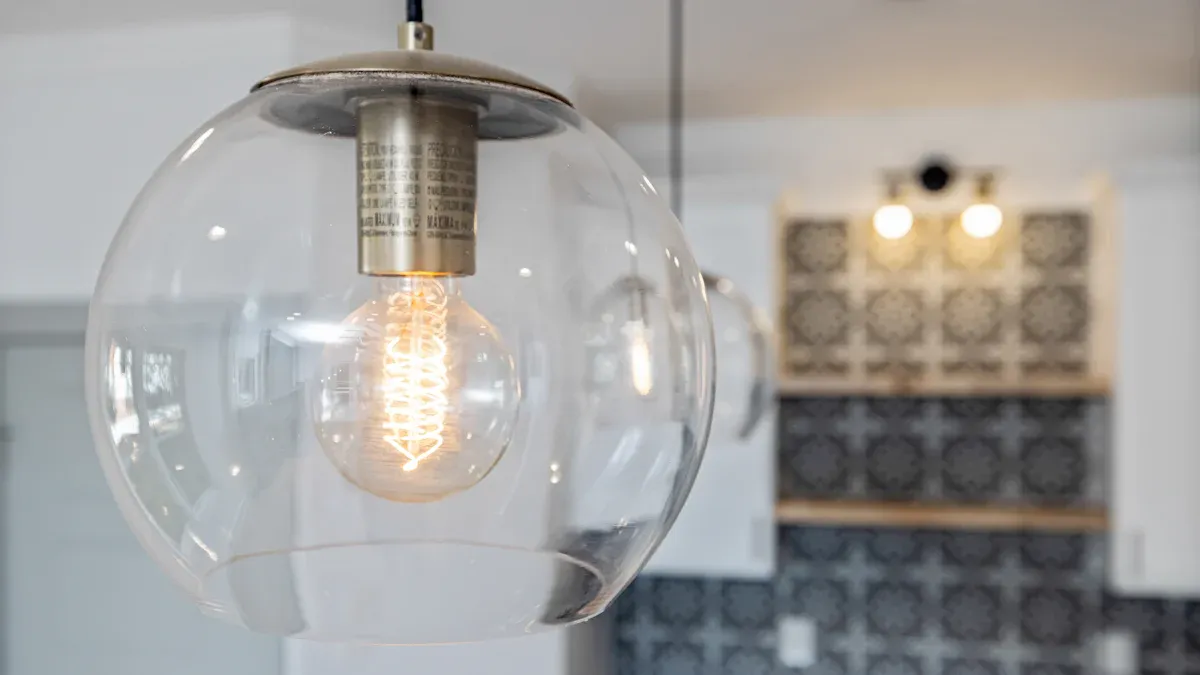
A glass pendant light can elevate your home. It combines aesthetics and functionality, creating a pleasant atmosphere. You can customize it to match your style, enhancing the visual appeal of the space. Whether modern or classic, the right choice ensures a harmonious overall look and the desired lighting effect.
Key Insights
-
Consider what you need the pendant light for. Should it illuminate the room or just create accents?
-
Look for a pendant light in the appropriate size. It should fit well in the room to ensure everything looks cohesive.
-
Think about the color and brightness of the light. Warm light creates coziness, while cool light aids in work.
Determine the Purpose of the Pendant Light
Lighting Purpose: Accent Lighting or Main Light Source
Before selecting a glass pendant light, you should define its lighting purpose. Do you want to create accent lighting that highlights specific areas, or are you looking for a main light source that illuminates the entire room? Accent lighting is ideal for showcasing artwork, furniture, or specific zones. In this case, a pendant light with clear or colored glass often creates a fascinating play of light. As a main light source, however, the fixture should provide even and sufficient brightness. Ensure that the light intensity meets the room's requirements.
Room Type: Kitchen, Dining Room, Living Room
The type of room plays a crucial role in selecting the right pendant light. In the kitchen, you need bright and functional lighting to optimally illuminate work surfaces. A light intensity of about 250 to 300 lumens per square meter is recommended. In the dining room, the lighting should feel cozy and inviting. A pendant light with 600 to 800 lumens above the dining table creates a pleasant atmosphere. In the living room, on the other hand, a light intensity of 100 lumens per square meter is often sufficient, as a relaxed ambiance is usually desired.
|
Room |
Recommended Lumens |
|---|---|
|
Dining Room |
600 - 800 Lumens |
|
Kitchen |
250 - 300 Lumens/m² |
|
Living Room |
100 Lumens/m² |
The right glass pendant light can not only enhance the functionality of the room but also underscore its style. Choose a fixture that meets both the room's requirements and your personal taste.
Selecting the Right Design for a Glass Pendant Light
Styles: Modern, Classic, Minimalist
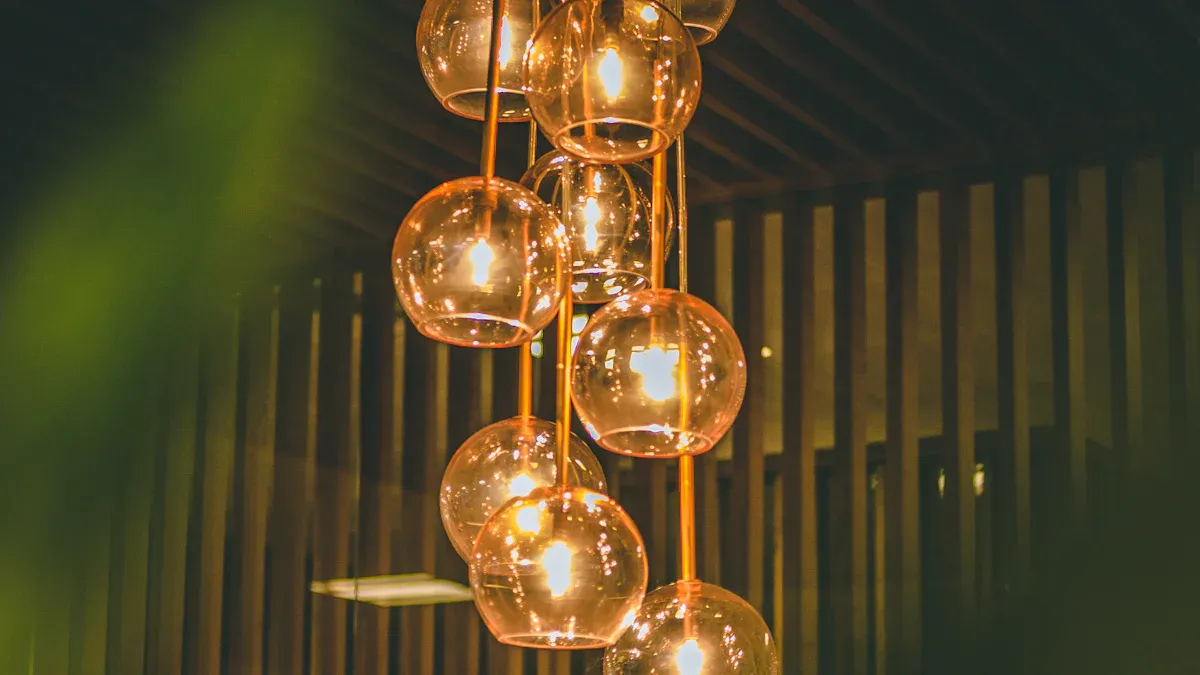
The design of your glass pendant light should complement your living style. Modern designs feature clean lines and simple shapes, fitting well in minimalist or contemporary spaces. Classic pendant lights, on the other hand, often appear opulent and elegant, enhancing traditional decor styles and creating a warm atmosphere. Minimalist models focus on simplicity and functionality, harmoniously integrating into spaces that avoid unnecessary decoration.
Pendant lights play a central role in designing the living area. They illuminate not only the dining table or ceiling but also influence the atmosphere. Individually adjustable models allow you to customize brightness and color temperature, enabling you to perfectly align the design of your fixture with your living style.
Types of Glass and Their Effects: Clear, Frosted, Colored
The choice of glass affects the light effect and ambiance. Clear glass provides bright and direct lighting, making it particularly suitable for spaces where you need a lot of light, such as the kitchen. Frosted glass diffuses light more softly, creating a cozy atmosphere, ideal for living or dining rooms. Colored glass adds accents and gives the room character, tinting the light in warm or cool tones depending on the color choice.
A glass pendant light with the right type of glass can enhance the room not only functionally but also aesthetically. Consider the effect you want to achieve and choose the glass accordingly.
Consider Size and Proportions of the Glass Pendant Light
Appropriate Size for the Room
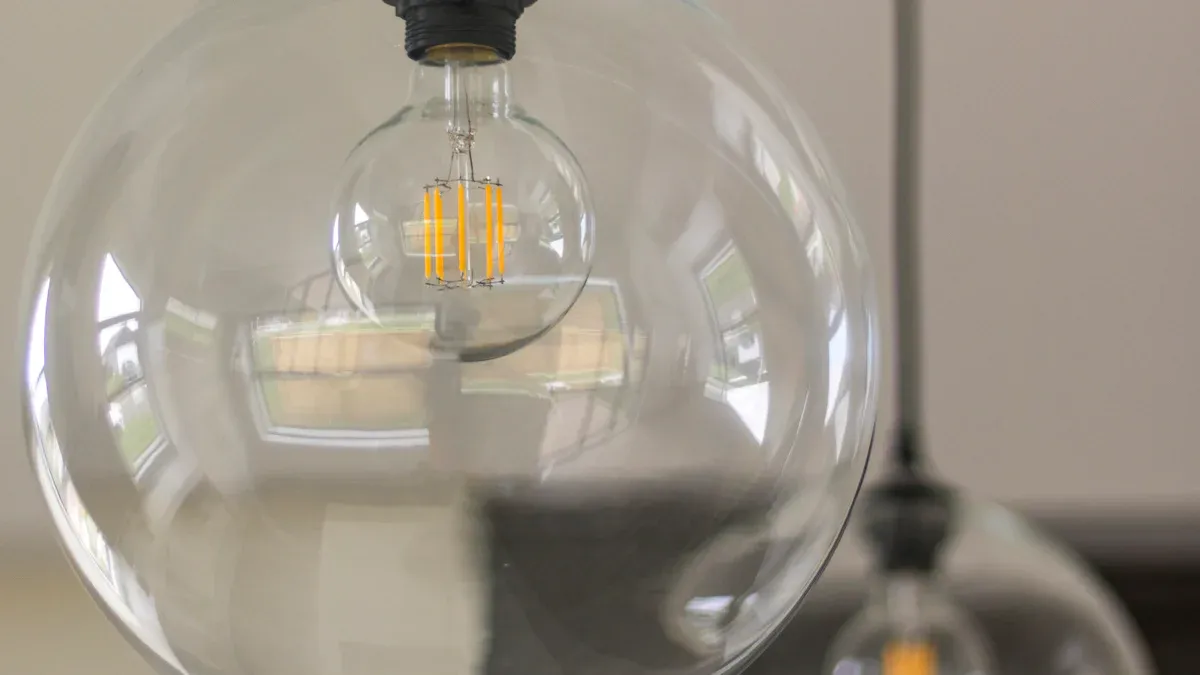
The size of the glass pendant light should be proportional to the room. A light that is too small can seem lost in the space, while one that is too large can overwhelm it. To determine the optimal size, you can use the following steps:
-
Calculate the square footage of the room by multiplying the length by the width.
-
Multiply this value by a recommended lumen value per square meter, depending on the room's use.
-
Example: A living room of 15 square meters requires about 1500 to 2250 lumens (15 m² x 100–150 lumens/m²).
-
This method helps you find the right size and light intensity for your pendant light. Ensure that the fixture is not only functional but also integrates harmoniously into the space.
Tip: A rule of thumb suggests that the light should be about one-third the width of the furniture piece it hangs over, such as a dining table.
Height and Suspension of the Fixture
The height and suspension of your pendant light affect the light effect and atmosphere in the room. A light that hangs too high can scatter the light too much, while one that hangs too low can visually shrink the space.
-
For dining tables, it is recommended to place the light about 70 to 80 cm above the tabletop.
-
In living areas, the light should hang so that it does not obstruct the line of sight but still provides even illumination.
The beam angle of the fixture also plays an important role. A narrow light cone (e.g., 10°) produces focused light, ideal for work areas. A wide light cone (e.g., 120°) provides soft and even lighting, perfect for living spaces.
Note: Adjust the height of the light to the room height. In rooms with low ceilings, choose compact models to maintain a pleasant spatial feeling.
Consider the Light Effect of the Glass Pendant Light
Light Color and Brightness
The light color and brightness of your glass pendant light significantly influence the atmosphere and functionality of the room. Warm light with a color temperature of about 2700 to 3000 Kelvin creates a cozy and relaxed mood, making it particularly suitable for living and dining rooms. Cool light with a color temperature of 4000 Kelvin or more, on the other hand, promotes concentration and fits well in work areas like the kitchen.
Brightness is measured in lumens and should be adjusted to the room size. For example, a living room of 20 square meters requires 3000 to 4000 lumens to ensure pleasant lighting. Ensure that the light source emits evenly to avoid shadow formation.
Did you know? Studies show that light not only affects spatial perception but also emotional feelings. Evenly distributed light improves well-being and enhances concentration.
|
Factor |
Description |
|---|---|
|
Lumen Count |
A living room of 20 square meters requires about 3000 to 4000 lumens for pleasant lighting. |
|
Color Temperature |
Warm light creates a cozy atmosphere, while cool light promotes concentration. |
|
CRI |
A high CRI combined with lumen count and color temperature leads to high-quality lighting. |
Compatibility with Light Sources: LED, Dimmable
The choice of the right light source is crucial for the functionality of your pendant light. LED light sources are particularly energy-efficient and long-lasting. They save over 80% energy compared to conventional bulbs and have a lifespan of up to 20,000 hours. Additionally, LEDs reach their full brightness instantly, making them ideal for daily use.
Dimmable light sources offer you additional flexibility. You can adjust the brightness to create the desired atmosphere. However, not all LEDs are dimmable, so check compatibility with your fixture when purchasing.
|
Criterion |
LED Light Sources |
Dimmable Alternatives |
|---|---|---|
|
Energy Efficiency |
Over 80% more efficient than incandescent bulbs |
Less efficient |
|
Lifetime |
20,000 hours |
10,000 hours |
|
Brightness on Startup |
Instantly fully bright |
Takes a few seconds |
|
Dimming Capability |
Many models available |
Not all models are dimmable |
|
Switching Durability |
Higher number of switching cycles |
Lower number |
Tip: Combine dimmable LEDs with a warm light color to create a cozy atmosphere that can be flexibly adjusted.
Quality and Care of Glass Pendant Lights
Material Quality and Workmanship
The quality of a glass pendant light heavily depends on its workmanship. High-quality models undergo strict quality controls to ensure durability and stability. During the hot processing, each fixture is checked for irregularities and bubble formation. These steps prevent weaknesses in the glass. A controlled cooling process in the cooling oven ensures that no cracks form and the structure of the glass remains intact.
After cooling, cold processing takes place. Here, precise sawing techniques are used to perfect the shape and functionality of the fixture. This careful processing guarantees that the pendant light not only looks appealing but is also robust and durable. When purchasing, ensure that the fixture meets these quality standards.
Cleaning and Maintenance
To keep your glass pendant light looking beautiful for a long time, you should clean it regularly. Dust and dirt can impair the light effect. Use a soft microfiber cloth to gently wipe the glass surface. For stubborn stains, a mixture of warm water and mild detergent works well.
Tip: Remove the light source before cleaning to avoid damage. Allow the fixture to dry completely before reassembling it.
Avoid aggressive chemicals or abrasive sponges, as they may damage the glass surface. With proper care, your glass pendant light will remain clear and radiant, significantly enhancing the atmosphere in your home.
The perfect glass pendant light combines purpose, design, size, light effect, and quality. Choose a fixture that enhances your space both functionally and aesthetically. A well-coordinated pendant light creates a pleasant atmosphere and underscores your style. Invest in quality to enjoy your lighting for a long time.
FAQ
How do I best clean a glass pendant light?
Clean the glass surface with a soft microfiber cloth. Use warm water and mild detergent for stubborn dirt. Remove the light source before cleaning.
Tip: Allow the fixture to dry completely before reassembling it.
What light color is suitable for living spaces?
Warm light (2700–3000 Kelvin) creates a cozy atmosphere. It is ideal for living and dining rooms as it promotes a relaxed mood.
Can I use LED light sources in any pendant light?
Not all pendant lights are compatible with LEDs. Check the manufacturer's specifications to ensure that your fixture is suitable for LED light sources.
Note: Check whether dimmable LEDs are supported if you wish to use this feature.