
Tips for the optimal placement of height-adjustable pendant lights
The placement of a height-adjustable pendant light significantly influences the ambiance of a room. It not only provides the right lighting but also accentuates the style of your home. How can you position a height-adjustable pendant light to ensure it is both practical and visually appealing? The answer lies in thoughtful planning.
Key Insights
-
Height-adjustable pendant lights are practical. You can change the height to adjust the light.
-
Above dining tables, the lamp should hang 60–70 cm high. This allows the light to be well distributed without causing glare.
-
Avoid mistakes such as using lamps that are too large or incorrect lighting. Choose a lamp that fits the table and select warm white light for coziness.
Advantages of a Height-Adjustable Pendant Light
Flexibility and Adaptation to Different Activities
A height-adjustable pendant light offers you maximum flexibility. You can adjust the height of the light according to your needs. When reading or working, you often require bright, focused light. Here, you can bring the light closer to the work surface. For relaxed evenings or cozy meals, you can hang it higher to create a softer light.
This adaptability makes the height-adjustable pendant light a versatile companion in your daily life. It not only adjusts to your activities but also to the mood you wish to create in the room. Thus, with just a few adjustments, you can change the atmosphere without needing additional lamps or light sources.
Practical Applications in Dining Rooms, Kitchens, and Living Rooms
In the dining room, a height-adjustable pendant light ensures the perfect lighting for your dining table. You can adjust it so that the light is evenly distributed without causing glare. In the kitchen, it is ideal for illuminating work surfaces or the kitchen island. Here, it helps you work precisely, whether chopping vegetables or decorating dishes.
In the living room, a height-adjustable pendant light allows you to set targeted accents. Whether above a coffee table or in a reading nook, the light gives you the opportunity to design the space individually. It combines functionality with aesthetics, becoming a true highlight in your home.
Basic Rules for Placing a Height-Adjustable Pendant Light
Recommended Heights for Dining Tables, Kitchen Islands, and Other Furniture
The correct height of a height-adjustable pendant light largely depends on the type of furniture piece you wish to illuminate. A well-placed light creates a pleasant atmosphere and prevents glare. Here are some recommended heights for different types of furniture:
|
Furniture Type |
Recommended Height (cm) |
Notes |
|---|---|---|
|
Dining Table |
60–70 |
Pleasant light atmosphere, does not obstruct view. |
|
Kitchen Island |
75–90 |
Glare-free illumination, does not block view. |
|
Sideboards/Lowboards |
120–150 |
Decorative light object, depending on ceiling height and room concept. |
When installing a pendant light above a dining table, it should hang about 60 to 70 cm above the tabletop. This height ensures that the light is evenly distributed without obstructing the view. For kitchen islands, a height of 75 to 90 cm is recommended to ensure functional lighting. For sideboards or lowboards, you can place the light higher, as it often serves as a decorative element.
Influence of Room Size, Ceiling Height, and Table Shape on Placement
The size of the room, the ceiling height, and the shape of the table play a crucial role in the placement of your height-adjustable pendant light. Here are some important points to consider:
-
Room Size: In a small room, the light should not hang too low to avoid visually shrinking the space. In larger rooms, you can experiment with height to create different light accents.
-
Ceiling Height: With high ceilings, you can hang the light lower to create a cozy atmosphere. In rooms with low ceilings, the light should hang higher to prevent the space from feeling cramped.
-
Table Shape: For round tables, a single light hanging centrally is often sufficient. For elongated tables, it is advisable to place multiple lights in a line to achieve even illumination.
Tip: Ensure that the light hangs at a height where you do not look directly into the shade. At the same time, it should be high enough for you to see your dining companion easily. An ideal distance of 60 to 70 cm between the tabletop and the bottom of the shade is recommended.
If the height-adjustable pendant light serves as general room lighting, it should hang at least 2 meters above the floor. This ensures optimal light distribution in the room without causing glare.
Practical Tips for the Optimal Use of a Height-Adjustable Pendant Light
Even Distribution with Multiple Lights
When placing several height-adjustable pendant lights over a table or kitchen island, even distribution is crucial. It ensures a harmonious light effect and prevents dark areas. Here are some practical tips that may help you:
-
Invisible Height Adjustment: Choose lights with an invisible height adjustment. This technique allows you to elegantly adjust the pendant height without compromising the design.
-
Flexibility: Utilize the ability to move the lights up or down. This way, you can regulate the space needed at the table and adjust the light intensity.
-
Glare Prevention: Ensure that the lights are equipped with diffusers. These minimize glare and provide even light distribution.
Tip: For elongated tables, place multiple lights in a line, while for round tables, a single light is often sufficient.
Importance of Light Color and Intensity
The color and intensity of the light from your height-adjustable pendant light influence the atmosphere and functionality of a room. A thoughtful lighting plan can change the perception of the space and enhance well-being. The following table shows how light color and intensity can be used effectively:
|
Aspect |
Description |
|---|---|
|
Lighting Plan |
A thoughtful lighting plan can change the perception of the space and enhance well-being. |
|
Light Color |
Warm white light creates a cozy atmosphere, while daylight white light conveys energy. |
|
Light Intensity |
Bright, even lighting promotes concentration in work areas. |
Note: For dining areas, warm white light is suitable as it creates a cozy mood. In work areas like the kitchen or office, choose daylight white light to promote concentration.
Common Mistakes in Placement and How to Avoid Them
The placement of a height-adjustable pendant light can be compromised by common mistakes. However, these mistakes can be easily avoided by following some basic rules:
-
Inappropriate Number of Lights: The number of pendant lights should match the length of the table. Too few lights lead to dark areas, while too many can overcrowd the space.
-
Incorrect Lamp Size: A lamp that is too small appears lost above a large table. An oversized lamp can overwhelm a small room.
-
Glare-Inducing Light Effect: The goal is to achieve even, glare-free illumination across the entire table area.
Tip: Carefully select the height of the light. Lights that hang too low obstruct the view and can be distracting. A height of 60 to 70 cm above the tabletop is ideal.
Common Mistakes at a Glance:
-
Incorrect Height Choice: Lights that hang too low can obstruct the view.
-
Inappropriate Light Color: Cold light feels uncomfortable, while warm white light creates a pleasant atmosphere.
-
Choice of Lamp Size: The size of the light should be proportional to the size of the table.
With these tips, you can avoid the most common mistakes and fully leverage the advantages of your height-adjustable pendant light.
Style and Design of Height-Adjustable Pendant Lights
Influence of Placement on Room Design
The placement of your height-adjustable pendant light affects the overall room design. A central position above a dining table or kitchen island draws attention and becomes a focal point. You can play with the height of the light to alter the room's effect. A low-hanging light creates an intimate atmosphere, while a higher position makes the room feel more open.
The choice of design for the light should harmonize with your decor style. A minimalist light fits well in modern spaces, while a decorative light with striking details complements classic or eclectic rooms.
Tip: Experiment with placement to find the perfect balance between functionality and aesthetics.
Examples of Cluster Lights and Minimalist Designs
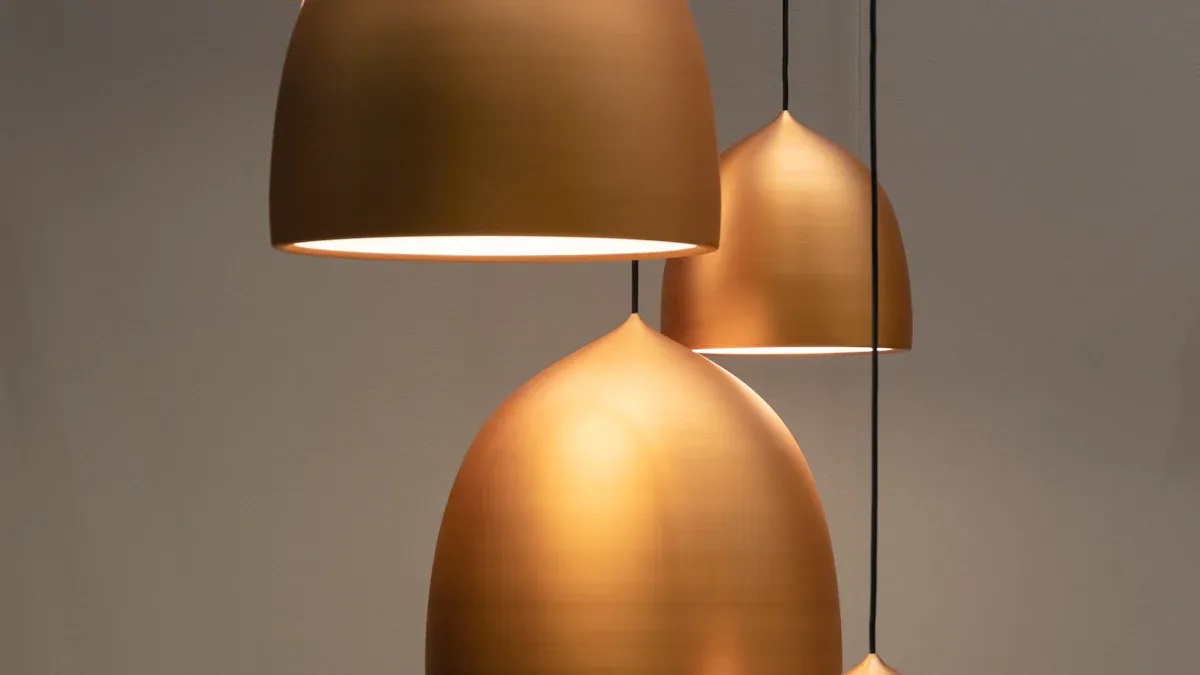
Cluster lights allow you to arrange several small lights in a group. These designs are particularly suitable for large rooms or high ceilings. You can arrange them at different heights to create a dynamic and interesting light effect.
Minimalist designs, on the other hand, focus on clean lines and simple shapes. They seamlessly integrate into modern spaces and draw attention to the lighting itself. A single height-adjustable pendant light with a simple shade can add elegance to your room without overwhelming it.
Note: Choose cluster lights for large rooms and minimalist designs for smaller or purist spaces.
The right placement of height-adjustable pendant lights enhances the functionality and design of your space. Utilize the flexibility to customize light and atmosphere to your liking.
Tip: Experiment with heights and designs. This way, you create harmonious lighting that emphasizes your style and enriches your daily life.
With these tips, your home will be perfectly showcased!
FAQ
How do I find the right height for my height-adjustable pendant light?
Test various heights until the light is evenly distributed and does not cause glare. For dining tables, 60–70 cm above the tabletop is ideal.
Can I use height-adjustable pendant lights in small rooms?
Yes, choose compact designs and hang the light higher. This way, the room appears larger while remaining functional.
What light color is suitable for dining areas?
Warm white light (2700–3000 Kelvin) creates a cozy atmosphere and is perfect for dining areas.