
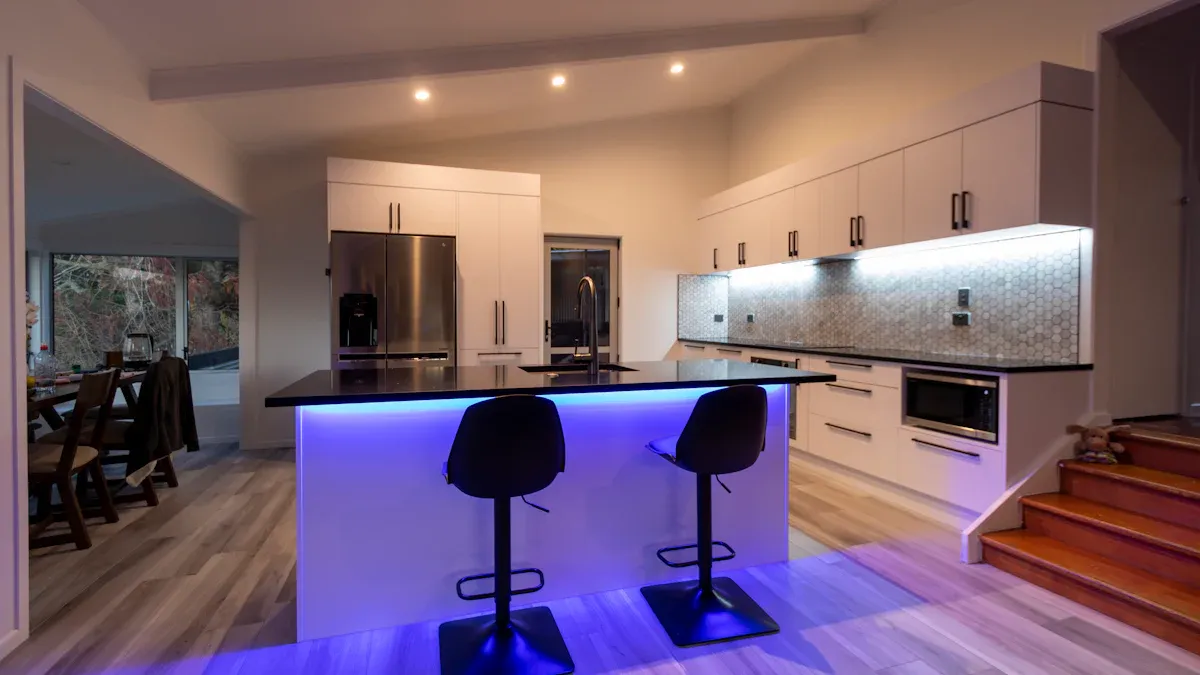
Discover the Latest Kitchen Lighting Trends for a Stylish 2025
Your kitchen deserves more than just functional lighting—it needs a touch of personality and innovation. In 2025, kitchen lighting trends are taking a bold leap forward, blending style with sustainability. Decorative and statement pendant lights are stealing the spotlight, offering a perfect mix of form and function. Whether you’re drawn to oversized pendants that command attention or island pendant lights that enhance your workspace, there’s something for every taste. With natural materials and smart lighting systems on the rise, you can create a space that’s both eco-friendly and visually stunning. Why settle for ordinary when your kitchen can shine?
Key Takeaways
-
Good kitchen lighting helps you work better. Use lights under cabinets, like LEDs, to see clearly and stay safe while cooking.
-
Using different types of lights makes the kitchen cozy. Mix general, task, and accent lights for a nice balance.
-
Big and colorful hanging lights are popular now. They look amazing and show off your personal style.
-
Pick lights made from eco-friendly materials. Choices like bamboo or recycled glass are both cool and good for the planet.
-
Buy strong and flexible light designs. Classic fixtures match new trends and keep your kitchen useful and pretty.
Why Kitchen Lighting Matters
Enhancing Functionality
Good lighting in your kitchen isn’t just about looks—it’s a game-changer for how you work. Imagine trying to chop vegetables or read a recipe in dim light. It’s frustrating, right? Task lighting solves this by giving you bright, focused illumination exactly where you need it. Under-cabinet LED strips are a great example. They eliminate shadows on countertops, making food prep safer and easier. You’ll also avoid eye strain, which can happen when your workspace isn’t well-lit.
Safety is another big reason to prioritize proper lighting. Brightness helps you spot potential hazards, like spills or sharp objects, before they become accidents. Layered lighting, which combines ambient, task, and accent lights, ensures every corner of your kitchen is well-lit. This approach minimizes shadows and glare, so you can move around confidently. For key areas like countertops and islands, placing fixtures at the right height—like pendant lights 30-36 inches above work surfaces—makes all the difference.
Elevating Aesthetics
Lighting does more than brighten your kitchen—it sets the mood. A well-lit kitchen feels warm and inviting, perfect for family gatherings or casual dinners with friends. Pendant lights, especially larger ones, can act as stunning focal points. They not only light up your space but also add character with unique shapes and finishes. Smaller pendants, on the other hand, blend seamlessly into your design while enhancing the overall vibe.
The right lighting fixtures can also highlight your kitchen’s best features. For example, matching sconces on either side of a farmhouse sink can draw attention to a beautiful backsplash or wall color. Bright, consistent lighting creates a welcoming atmosphere, while dim or uneven lighting can make the space feel uninviting. By choosing fixtures that complement your style, you can transform your kitchen into a space that’s both functional and beautiful.
Top Kitchen Lighting Trends for 2025
Pendant Light Trends
Oversized pendants as bold focal points
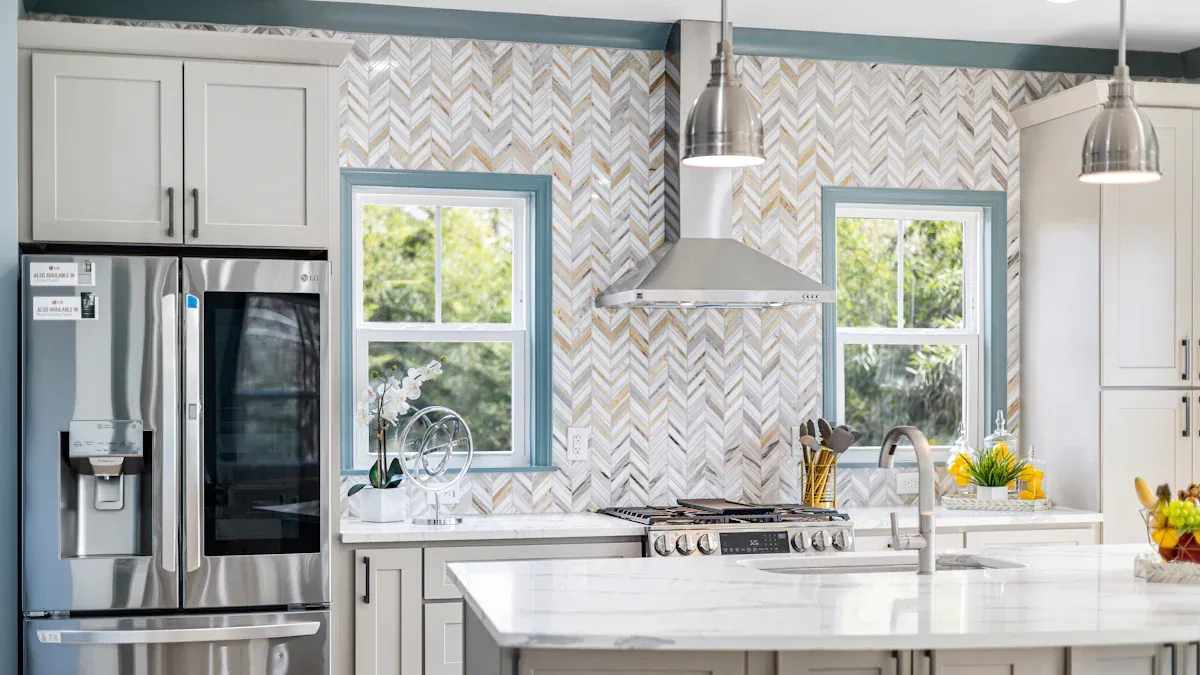
Oversized pendants are making waves in kitchen lighting trends for 2025. These large fixtures don’t just illuminate your space—they transform it into a design masterpiece. Imagine three oversized pendants hanging above a grand kitchen island. They evenly light the area while adding a touch of elegance. Or picture a single gigantic pendant as the centerpiece of your kitchen, creating a dramatic and unforgettable look. For a more functional yet stylish approach, you could opt for two oversized pendants over a countertop, stretching light across longer spaces while serving as the main design element. Oversized pendants are perfect for defining areas like islands or breakfast nooks, blending beauty with practicality.
|
Example Description |
Purpose |
|---|---|
|
To evenly light the space and enhance the design. |
|
|
A gigantic oversized light fixture as a center focal point |
To create a dramatic look and serve as a stunning design element. |
|
Dual oversized pendant lights for the kitchen island and a larger single light for the breakfast nook |
To add function and beauty, defining different areas within the kitchen. |
|
Two large pendant lights instead of three small ones over a countertop space |
To stretch lighting across longer spaces and serve as the main design element or focal point. |
The rise of colorful pendant lights for a vibrant touch
If you’re looking to add personality to your kitchen, colorful pendants are the way to go. These vibrant fixtures bring energy and playfulness to your space. Whether you choose bold reds, calming blues, or sunny yellows, colorful pendants can reflect your unique style. They’re especially effective in neutral kitchens, where they act as eye-catching statement pieces. Pair them with minimalist designs for a modern look or vintage-inspired shapes for a retro vibe. With colorful pendants, your kitchen can feel lively and inviting.
Decorative and Statement Pendant Lights
Unique designs that combine functionality and style
Decorative and statement pendant lights are all about blending beauty with practicality. These fixtures don’t just light up your kitchen—they become a part of its personality. Linear pendants, for example, provide even lighting across your island while making a bold statement. Cluster pendants, on the other hand, create visual interest with varying heights. Sleek modern LED pendant lamps are another great option. They’re energy-efficient and perfect for contemporary kitchens. If you prefer a softer look, Nordic glass pendants offer simple elegance with diffused lighting. By choosing unique designs, you can make your kitchen both functional and stylish.
|
Style |
Characteristics |
|---|---|
|
Linear Pendant |
Provides even lighting across the island, ensuring a bold statement. |
|
Cluster Pendants |
Offers a visually striking effect with varying heights for added interest. |
Popular materials like brass, glass, and recycled materials
Materials play a big role in the appeal of decorative and statement pendant lights. Brass and glass are timeless choices, adding a touch of luxury to your kitchen. For a more sustainable option, consider recycled materials. Eco-friendly pendant lights made from bamboo, rattan, or repurposed glass are gaining popularity. They combine style with sustainability, making them a favorite among homeowners. Over 96% of buyers prefer eco-friendly options when they align with their style and budget. By choosing these materials, you can create a kitchen that’s both beautiful and environmentally conscious.
Island Pendant Lights
How to use pendant lights to enhance kitchen islands
Island pendant lights are a must-have for modern kitchens. They enhance visibility for cooking and dining, making your kitchen safer and more efficient. These lights also serve as focal points, adding character to your space. Whether you’re preparing meals or hosting guests, island pendant lights make your kitchen island the star of the show. Adjustable heights let you create different atmospheres, from intimate to open and airy. With so many styles available, you can find the perfect pendant lights to suit your needs.
Adjustable and flexible designs for versatile lighting
Flexibility is key when it comes to island lighting. Adjustable pendant lights let you customize the height to match your activity. Need focused light for chopping vegetables? Lower the pendants. Want a relaxed vibe for a dinner party? Raise them for a softer glow. Designs like the Petal Wire Pendant offer dimmable functionality and adjustable heights, making them ideal for any occasion. With versatile island lighting, you can adapt your kitchen to fit your lifestyle.
|
Pendant Light Design |
Features |
|---|---|
|
Petal Wire Pendant |
Adjustable height, dimmable functionality |
|
Other Adjustable Designs |
Customizable heights for various settings |
Layered Lighting for Depth and Dimension
Combining ambient, task, and accent lighting for a cohesive look
Layered kitchen lighting is the secret to creating a space that’s both functional and visually stunning. By combining ambient, task, and accent lighting, you can achieve a balanced and cohesive look. Ambient lighting acts as the foundation, providing soft, general illumination. Think recessed lights or ceiling fixtures that brighten the entire room. Task lighting, on the other hand, focuses on specific work areas like countertops or islands. Under-cabinet lights or pendant fixtures are perfect for this. Accent lighting adds the finishing touch, highlighting architectural features or design elements like a backsplash or open shelving.
Pro Tip: Don’t forget decorative lighting! It’s the cherry on top, adding personality and style to your kitchen.
When you layer these types of lighting, your kitchen becomes more than just a workspace—it transforms into a warm, inviting hub for cooking, dining, and entertaining.
Examples of how to layer lighting in different kitchen layouts
Layered lighting works beautifully in any kitchen layout. In an open-plan kitchen, long pendant lamps over the island provide task lighting, while a candelabra fixture above the dining table sets the mood with ambient light. For a sleek, modern look, recessed fixtures can serve as the main light source. These fixtures offer a clean aesthetic and adjustable brightness, allowing you to focus light where it’s needed most. Add track lighting or wall sconces to highlight artwork or unique design features.
No matter your layout, layering lights ensures every corner of your kitchen is well-lit and functional.
Sustainable and Energy-Efficient Designs
The rise of LED technology and smart lighting systems
In 2025, kitchen lighting trends are all about sustainability. LED technology has come a long way, offering energy-efficient solutions that don’t compromise on style. Modern LEDs provide warm, natural light by balancing color temperature and the Color Rendering Index. This makes them perfect for kitchens, where lighting needs to be both practical and inviting. Plus, LEDs last longer and consume less energy, helping you save money while reducing your carbon footprint.
Smart lighting systems take it a step further. With features like dimming, scheduling, and voice control, you can customize your kitchen lighting to suit any occasion. Imagine adjusting the brightness with a simple voice command while you cook or setting a timer to turn off lights automatically. These advancements make your kitchen smarter and greener.
Eco-friendly materials like bamboo and repurposed glass
Sustainability isn’t just about energy efficiency—it’s also about the materials you choose. Eco-friendly options like bamboo, reclaimed metal, and repurposed glass are gaining popularity in kitchen lighting designs. Bamboo fixtures bring a natural, earthy vibe, while recycled glass adds a touch of elegance. Reclaimed metal offers a rustic, industrial look that’s both trendy and sustainable. These materials not only reduce waste but also add unique character to your kitchen.
By embracing these sustainable designs, you can create a kitchen that’s stylish, functional, and kind to the planet.
How to Choose the Right Lighting for Your Kitchen
Assessing Your Kitchen Layout
Identifying key areas that need lighting
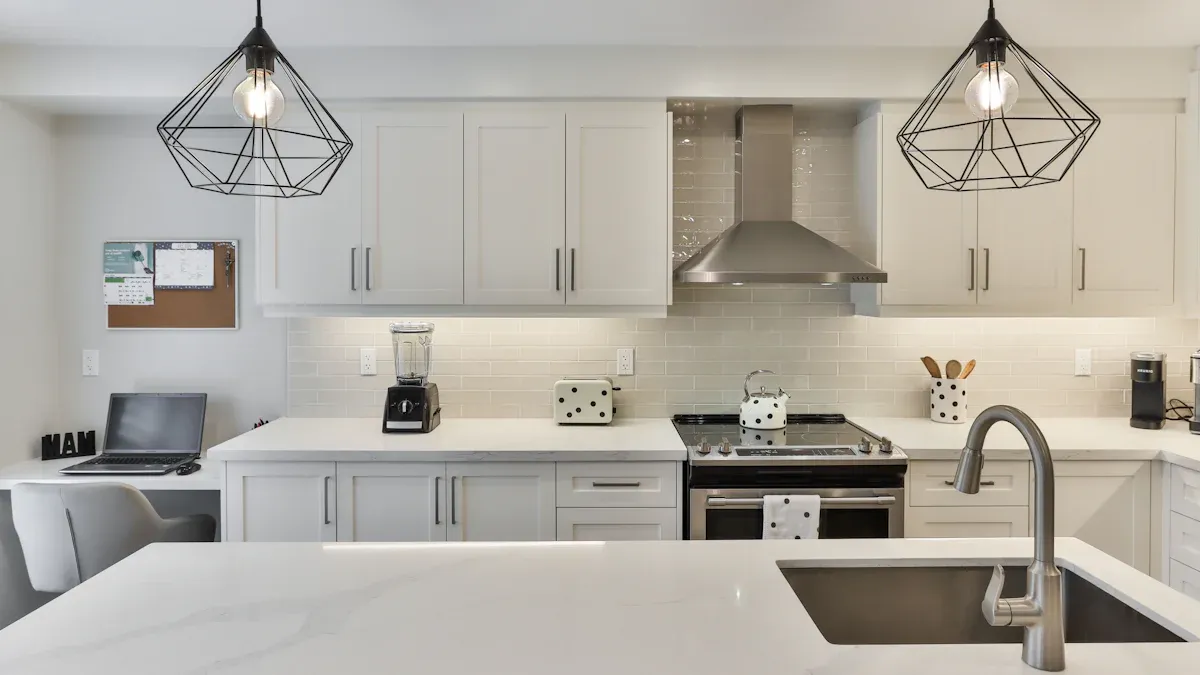
When planning your kitchen lighting, start by identifying the areas that need illumination the most. Prep stations, like countertops and islands, benefit from focused lighting to improve visibility and reduce shadows. Pendant lights or under-cabinet fixtures work wonders here. For dining spaces, softer lighting creates a cozy atmosphere. Don’t forget dimming switches—they let you adjust brightness for different tasks, adding flexibility and comfort. Proper placement is key. Position fixtures directly above work areas to ensure safety and functionality.
Adapting lighting choices to open-concept versus closed kitchens
Your kitchen layout plays a big role in determining the best lighting strategy. Open-concept kitchens thrive on layered lighting. Combine ambient, task, and accent lights to define spaces and maintain balance. For example, pendant lights over the island can provide task lighting, while recessed lights brighten the entire room. Closed kitchens, on the other hand, benefit from specific fixtures for distinct zones. A chandelier above the dining table or sconces near the sink can add both style and practicality.
Matching Lighting to Your Style
Choosing fixtures that align with your kitchen's design theme
Your lighting should reflect your kitchen’s personality. Whether you’re going for farmhouse charm, industrial vibes, or sleek modernity, there’s a fixture for you. Pendant lights are versatile and can match almost any theme. For a contemporary update, try minimalist elegance with clean lines and neutral tones. If you prefer bold designs, opt for statement pieces like oversized pendants or unique chandeliers. Materials matter too—brass, glass, or even bamboo can enhance your kitchen’s aesthetic.
Balancing trendy and timeless elements in your lighting choices
Trends come and go, but timeless designs stick around. To strike the right balance, choose fixtures with classic shapes like round or rectangular. These pair well with trending kitchen light fixtures, ensuring your space feels fresh without being overly trendy. Sustainability and durability are also key. Look for eco-friendly materials that add warmth and texture without overwhelming the space. Having a clear vision for your kitchen lighting ideas will help you make choices that stand the test of time.
Practical Tips for Installation
Ensuring proper placement and spacing of fixtures
Placement can make or break your lighting plan. Install pendant lights about 30 inches above countertops for optimal function and aesthetics. Use multiple light sources at different heights to reduce shadows and create depth. Overhead fixtures should be directly above key work areas like stovetops and sinks. Don’t forget dimmers—they’re a game-changer for adjusting brightness based on your needs.
Working with professionals for optimal results
While DIY projects can be fun, kitchen lighting installation often requires a professional touch. Electricians can ensure fixtures are safely installed and properly spaced. They’ll also help you integrate advanced features like smart lighting systems or dimming switches. Investing in professional help guarantees your lighting not only looks great but also works flawlessly.
Making Trends Timeless
Investing in Versatile Designs
Choosing fixtures that can adapt to future design changes
When it comes to kitchen lighting, versatility is key. You want fixtures that can evolve with your space as trends shift. Layered lighting is a great example. By combining ambient, task, and accent lights, you can adjust the mood and functionality of your kitchen effortlessly. Sculptural light fixtures also offer flexibility. Their artistic designs make them focal points, but they’re adaptable enough to fit into various styles. Smart lighting systems take versatility to the next level. With features like dimming and scheduling, they let you customize your lighting to match your needs, whether you’re hosting a dinner party or prepping meals.
Pro Tip: Choose lighting designs that blend timeless elements with modern features. This ensures your kitchen stays stylish, even as trends change.
The importance of quality and durability in lighting
Investing in high-quality lighting fixtures saves you time and money in the long run. Look for options with robust warranties to guarantee performance and peace of mind. Materials matter too. High-grade metals or treated plastics enhance durability and reduce maintenance costs. Balancing cost and quality is crucial. While cheaper fixtures might seem appealing, they often lead to higher expenses due to frequent replacements. Durable lighting ensures your kitchen remains functional and beautiful for years to come.
Balancing Trends with Personal Preferences
Incorporating trends in a way that reflects your unique style
Trends are exciting, but your kitchen should feel like your space. Pendant lights are a great way to add personality while staying on-trend. Use them individually or in clusters to create unique designs. Mixed metal finishes can also add depth and character. Pair brass with matte black or polished chrome for a curated look. Task and accent lighting, like under-cabinet fixtures, enhance functionality while complementing your aesthetic.
|
Strategy |
Description |
How to Make it Timeless |
|---|---|---|
|
Pendant Lights |
Use individually or in clusters for unique designs. |
Opt for simple, clean designs and timeless finishes. |
|
Mixed Metal Finishes |
Introduce depth and personalization by mixing finishes. |
Limit to two finishes for a timeless look. |
|
Task and Accent Lighting |
Provide focused illumination and enhance aesthetics. |
Choose classic shapes for fixtures. |
Avoiding overcommitment to fleeting fads
It’s easy to get swept up in the latest trends, but moderation is key. Homeowners have successfully balanced trends with personal preferences by mixing metal finishes or arranging pendant lights creatively. Task lighting, like under-cabinet LEDs, offers a functional yet stylish touch. Instead of overhauling your entire kitchen, incorporate small trendy elements that complement your overall design. This approach keeps your space fresh without feeling dated.
Note: Trends come and go, but your personal style lasts. Focus on what makes your kitchen feel like home.
Kitchen lighting trends in 2025 are redefining how you illuminate your space. By combining layered lighting designs—task, ambient, and accent—you can create a kitchen that’s both functional and inviting. Decorative and statement pendant lights are leading the charge, offering unique finishes and textures that add character to your home. Whether you choose natural materials like rattan or embrace smart lighting systems for convenience, the options are endless. Versatile fixtures, such as kitchen island pendants or under-cabinet LEDs, ensure your lighting adapts to your needs while staying energy-efficient. With the right choices, your kitchen can shine in style for years to come.
Pro Tip: Invest in high-quality, timeless designs that balance trends with your personal style. This way, your kitchen lighting will always feel fresh and functional.
FAQ
How do I decide the right number of pendant lights for my kitchen island?
The number depends on your island’s size and the pendants’ dimensions. For a standard 6-foot island, two to three pendants work well. Space them evenly for balanced lighting.
Tip: Leave about 24-30 inches between each pendant for the best look and functionality.
Can I mix different lighting styles in my kitchen?
Absolutely! Mixing styles adds character. Pair modern recessed lights with vintage pendants or industrial sconces. Just ensure the finishes and colors complement each other for a cohesive look.
What’s the best way to make my kitchen lighting energy-efficient?
Choose LED bulbs and smart lighting systems. LEDs use less energy and last longer. Smart systems let you control brightness and schedules, saving even more energy.
Pro Tip: Look for ENERGY STAR-certified fixtures for maximum efficiency.
How high should I hang pendant lights above a countertop?
Hang them 30-36 inches above the countertop. This height provides enough light without obstructing your view or workspace.
Are dimmers worth adding to kitchen lighting?
Yes! Dimmers let you adjust brightness for different tasks and moods. Bright light for cooking, softer light for dining—it’s all possible with dimmers.
Note: Make sure your bulbs are dimmer-compatible before installation.