
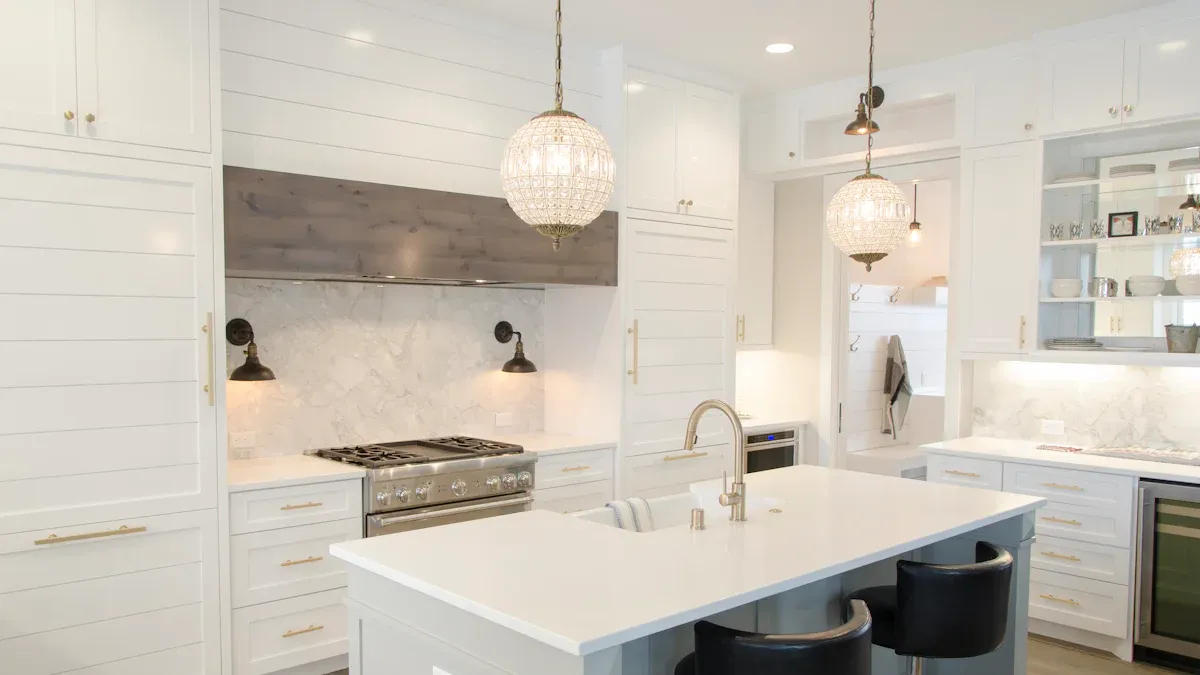
Finding the right pendant light for your kitchen
Choosing the right lighting in your kitchen is crucial. A well-placed pendant light not only provides clear visibility over work surfaces and cooking areas but also ensures safety when handling knives and other kitchen utensils. With just the push of a button, you can create a bright and functional atmosphere that makes cooking easier. At the same time, a stylish kitchen pendant light shapes the ambiance of the room and quickly becomes a focal point. Do not overlook this decision – your kitchen deserves the perfect light.
Key Insights
-
A good pendant light makes the kitchen safer and brighter. Hang it over work surfaces.
-
You can choose between direct and indirect light. Direct light helps with precise tasks. Indirect light creates coziness.
-
The pendant light should match the size of the table. Tip: Its width should be one-third to half of the table width.
-
Height-adjustable lamps are practical. You can hang them higher or lower as needed.
-
LED lamps are economical and long-lasting. They consume little power and are perfect for the kitchen.
Functionality and Purpose of Kitchen Pendant Lights
The Importance of Proper Lighting in the Kitchen
The lighting in your kitchen affects not only functionality but also safety. A well-thought-out lighting plan ensures that you can work without glare. Targeted spots on work surfaces improve visibility and make kitchen tasks easier. Indirect lighting creates an inviting atmosphere and increases brightness in the room.
Tip: LED spots under wall cabinets provide even illumination and help you find utensils quickly. They are particularly efficient and long-lasting.
Different Types of Light and Their Practical Applications
Various light sources play a central role in the kitchen. Bright, direct lighting is excellent for work areas like the kitchen island or dining table. Indirect lighting, on the other hand, creates a cozy mood that makes the space inviting.
-
Direct lighting: Perfect for precise tasks like cutting or cooking.
-
Indirect lighting: Ideal for relaxed moments like shared meals.
-
Dimmable lights: Allow you to adjust the light intensity and color temperature individually.
For work surfaces, a light intensity of about 300 Lux is recommended. LED spotlights are particularly suitable as they ensure even illumination and consume less power than halogen lamps.
How Pendant Lights Influence the Atmosphere in the Kitchen
Pendant lights are not only functional but also an important design element. They create a warm and relaxed atmosphere, especially in the dining area. With dimmable pendant lights, you can adjust the light intensity to suit your needs.
|
Room Type |
Recommended Daylight Supply |
Supplementary Artificial Lighting |
Optimal Lux Values |
|---|---|---|---|
|
Kitchen |
TQ >2% |
3000-4000K, CRI >90 |
300-500 Lux, 750 at work surfaces |
A well-thought-out lighting concept ensures that light is placed exactly where you need it. Choosing fixtures that complement each other or provide interesting contrasts contributes to creating a pleasant atmosphere.
Design and Materials for Kitchen Pendant Lights
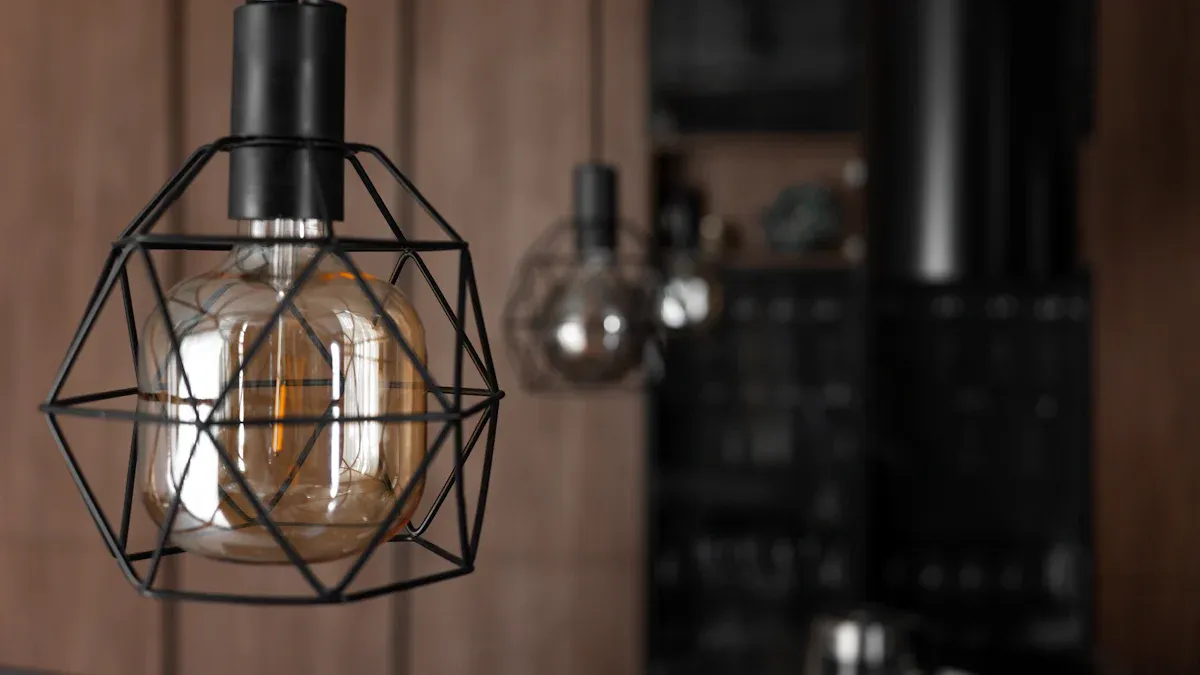
How Design Enhances the Style of Your Kitchen
The design of your kitchen pendant light plays a central role in shaping the space. It emphasizes the style of your kitchen and can influence the overall character of the room. Different kitchen styles require specific materials and fixture shapes that perfectly complement the desired look.
|
Recommended Materials and Fixtures |
|
|---|---|
|
Rustic Style |
Natural materials like rattan, Tiffany style |
|
Modern Kitchen |
Glass and metal |
|
Antique/Luxury Kitchen |
Rustic and crystal chandeliers |
A modern kitchen benefits from clean lines and minimalist designs, while a rustic style is highlighted by warm, natural materials like wood or rattan. For a luxurious kitchen, opulent crystal chandeliers radiate elegance and sophistication.
Materials like Glass, Metal, and Wood: Pros and Cons
The choice of material for your pendant light influences both aesthetics and durability. Glass gives your kitchen a noble appearance but is more susceptible to impacts. Metal is robust and durable, ideal for an industrial look. Wood brings warmth and naturalness to the space but requires regular maintenance.
|
Properties |
|
|---|---|
|
Metal |
Robust and durable, ideal for the industrial look. |
|
Glass |
Noble appearance, but more prone to breakage. |
|
Wood |
Brings warmth to the room but requires more maintenance. |
If you are looking for a low-maintenance option, metal is a good choice. Glass is suitable for elegant kitchens, while wood creates a cozy atmosphere.
Color Choice and Its Impact on Room Design
The color choice of your pendant light influences the mood and design of your kitchen. Bright colors like blue or green create a fresh and relaxed atmosphere. Muted colors like gray or beige appear elegant and timeless. Yellow and orange promote a cheerful mood and can stimulate appetite.
-
The wall color positively influences the cooking experience and mood in the kitchen.
-
Muted colors like light gray or beige create an elegant atmosphere.
-
Bright blue conveys spaciousness and relaxation.
-
Eucalyptus green brings freshness to minimalist kitchens.
-
Yellow and green promote a cheerful and cozy ambiance, while orange stimulates appetite.
Choose colors that complement the style of your kitchen and create the desired atmosphere. A harmonious color scheme makes your kitchen a place where you enjoy spending time.
Size and Placement of Kitchen Pendant Lights
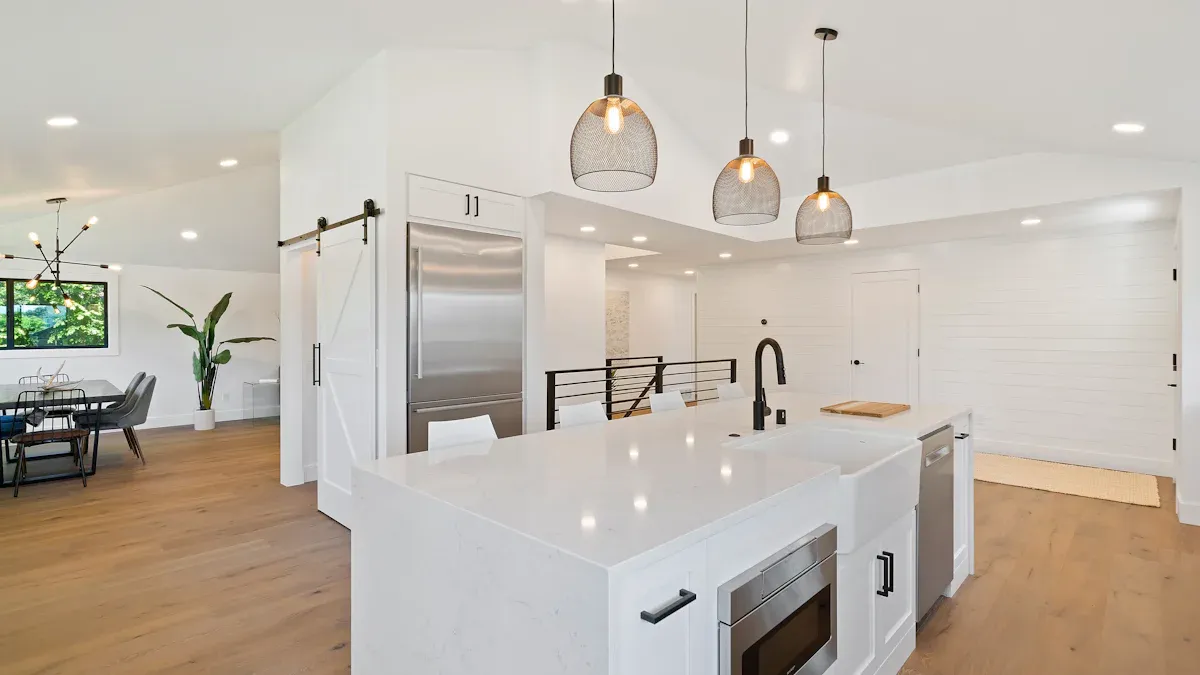
The Right Size in Relation to Table or Room Size
The size of the pendant light should always be proportional to the size of the table or room. A light that is too small appears lost, while an oversized light can overwhelm the space. You can apply a simple rule: the width of the pendant light should be about one-third to half of the table width.
For larger rooms or long dining tables, several smaller pendant lights hung in a row are suitable. These not only create even lighting but also add visual accents.
Tip: Measure the width of your table or kitchen island before selecting a pendant light. This ensures that the proportions appear harmonious.
Optimal Placement Above Dining Table, Kitchen Island, or Work Surface
The placement of the pendant light affects both the functionality and aesthetics of your kitchen. Above a dining table, the light should be centrally positioned to ensure even illumination. Above a kitchen island, you can install several pendant lights at equal intervals to illuminate the entire area.
The ideal height for a pendant light is about 75-90 cm above the table or work surface. This prevents glare and ensures that the light does not obstruct movement.
-
Dining Table: A central placement creates a pleasant atmosphere during meals.
-
Kitchen Island: Several lights in a row provide even lighting.
-
Work Surface: Ensure that the light does not hang too low to allow for freedom of movement.
Note: If you choose dimmable pendant lights, you can adjust the light intensity as needed – ideal for various activities in the kitchen.
Considering Ceiling Height and Room Proportions
The ceiling height plays a crucial role in choosing and placing your pendant light. In rooms with low ceilings, you should opt for compact models that do not protrude too far into the room. For high ceilings, larger or multi-tiered pendant lights are suitable to visually fill the space.
An adjustable pendant light offers you flexibility, especially if you want to adjust the height according to the occasion. Ensure that the light does not hang too low to maintain a clear view and freedom of movement.
|
Ceiling Height |
Recommended Pendant Light Height |
Tips |
|---|---|---|
|
Low (<2.5 m) |
Compact, flat models |
Avoid long cables or chains. |
|
Standard (2.5-3 m) |
Medium height (75-90 cm above table) |
Choose models with adjustable height. |
|
High (>3 m) |
Large or multi-tiered lights |
Use eye-catching designs to fill the space. |
Tip: Consider the room proportions and choose a pendant light that is both functional and visually fitting for the space.
Adjustability and Maintenance of Kitchen Pendant Lights
Advantages of Height-Adjustable Pendant Lights
Height-adjustable pendant lights offer you maximum flexibility. You can adjust the height of the light as needed. When cooking, you need direct lighting, while a dimmed, lower position during meals creates a cozy atmosphere.
A study shows that 65% of German households use pendant lights. The optimal height above a dining table is 60–70 cm. With height-adjustable models, you can easily implement this recommendation. These lights are particularly practical in kitchens with varying requirements, such as a combination of work and dining areas.
|
Data Point |
Value |
|---|---|
|
Use of Pendant Lights in German Households |
65% |
|
Optimal Height Above Dining Table |
60–70 cm |
|
Proportion of Pendant Lights with LED Technology |
Over 75% |
Tip: Choose a pendant light with easy height adjustment to maximize comfort in your kitchen.
Low-Maintenance Materials and Easy Cleaning
The choice of material not only affects the design but also the maintenance of your pendant light. Metal and glass are particularly low-maintenance. A damp cloth is often sufficient to remove dust and grease. Wood, on the other hand, requires regular care to preserve its natural beauty.
For kitchens with high usage, materials that are resistant to grease and dirt are recommended. Glass lights with smooth surfaces are quick to clean. Metal lights are robust and resistant to scratches.
-
Low-Maintenance: Glass and metal.
-
Regular Maintenance: Wood.
Note: Clean your pendant light regularly to maintain light quality and appearance.
Energy Efficiency and Longevity of Light Sources
Modern light sources like LEDs are not only energy-efficient but also long-lasting. They consume up to 90% less energy than conventional bulbs. With a lifespan of up to 25,000 hours, they last up to 25 times longer.
|
Feature |
LEDs |
Incandescent Bulbs |
|---|---|---|
|
Energy Consumption |
Up to 90% less |
Standard consumption |
|
Lifespan |
Up to 25 times longer |
Shorter lifespan |
Although LEDs are more expensive to purchase, the savings on electricity costs and the infrequent replacement offset the costs. 66% of Germans already use LED lighting in the kitchen. Energy efficiency and pleasant light colors are among the most important purchasing criteria.
Quote: LEDs are light sources that provide good performance despite low energy consumption. An LED under-cabinet light effectively illuminates the kitchen work areas.
Choosing the perfect pendant light for your kitchen requires consideration of several factors. Functionality, design, size, placement, and maintenance play a crucial role. Calculate the required light intensity (500–700 lx) and distribute the lumens evenly across general and accent lighting. Statistics show that 65% of households use pendant lights, with a height of 60–70 cm above the dining table being ideal. Opt for LED technology to save energy and ensure a long lifespan. Choose a design that visually enhances your kitchen while being practical.
Tip: Height-adjustable models offer flexibility and adapt to different requirements.
FAQ
Which pendant light is best suited for a modern kitchen?
For a modern kitchen, pendant lights made of glass or metal are suitable. These materials emphasize the minimalist style. Choose clean lines and simple designs to highlight the modern look.
How high should a pendant light hang above the dining table?
The ideal height for a pendant light above the dining table is 60 to 70 cm. This height ensures pleasant lighting and prevents glare.
Are LED light sources recommended for pendant lights?
Yes, LED light sources are highly recommended. They are energy-efficient and long-lasting. LEDs provide good light quality and are available in various color temperatures.
Which materials are low-maintenance for pendant lights?
Metal and glass are low-maintenance materials. They can be easily cleaned with a damp cloth. Wood requires more maintenance to preserve its natural beauty.
Can I use multiple pendant lights in my kitchen?
Yes, multiple pendant lights can be used in a kitchen. They create even lighting and add visual accents. Especially above a long kitchen island, several lights are ideal.